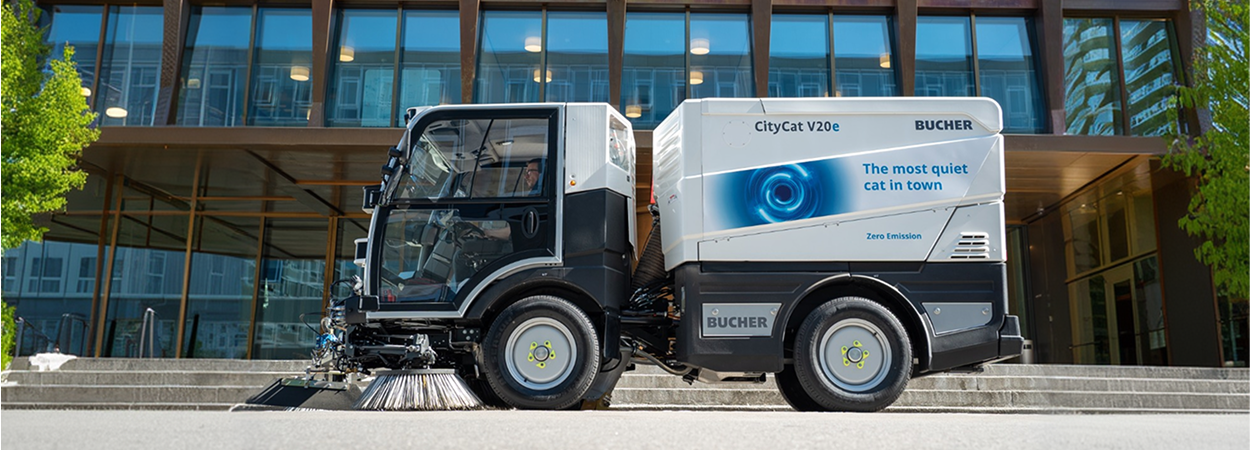
Traditional street cleaning methods are no longer enough for modern cities. Discover how mechanized solutions are transforming efficiency, cost and air quality.
.png)
As cities expand and populations increase, maintaining clean and dust-free roads becomes significantly more challenging. For decades, manual street cleaning has been the primary method used across urban environments. While it continues to play a role, its limitations are becoming increasingly evident in modern city management.
Manual cleaning is labour-intensive, time-consuming and often inconsistent. Workers are limited by physical capacity, and large road networks require repeated cleaning cycles to maintain acceptable standards. In high-traffic areas, dust and debris accumulate faster than they can be cleared, leading to inefficient operations and rising costs.
Mechanized street cleaning offers a far more scalable and reliable alternative. Modern road sweeping machines are designed to cover large areas quickly with minimal human intervention. Equipped with rotating brushes, vacuum suction systems and dust suppression mechanisms, these machines can remove both coarse debris and fine particulate matter in a single pass.
One of the most significant advantages of mechanized cleaning is consistency. Machines deliver uniform results regardless of road conditions or traffic levels, ensuring that cleanliness standards are maintained across entire cities. This is particularly important for municipalities that are accountable for public hygiene and environmental benchmarks.
Cost efficiency is another critical factor. While mechanized systems require higher initial investment, they significantly reduce long-term operational expenses. Fewer workers are needed, cleaning cycles are reduced and fuel consumption is optimized through efficient routing and performance.
Perhaps most importantly, mechanized sweepers contribute to better air quality. Manual sweeping often redistributes dust into the air, increasing particulate pollution. In contrast, modern sweepers are designed to capture fine particles such as PM10 and PM2.5, preventing them from becoming airborne.
As cities move toward smarter infrastructure and sustainable practices, mechanized street cleaning is no longer a luxury — it is a necessity.
For growing urban environments, mechanized cleaning delivers the efficiency, consistency and environmental benefits that manual methods simply cannot match.



.png)

.png)